Ghost Parenting
How imaginary fear is used to control children — and what it leaves behind
Hey guys, my name is Saral and today I want to share something serious that I have been noticing around me — something I have also personally experienced in my childhood.
So let’s start from a recent incident.
A few days ago, one of my relatives came to my home with their 4–5-year-old child. I was playing with him when his mother came with food to feed him. Like most kids, he didn’t want to eat. He just wanted to keep playing.
Instead of calmly explaining or waiting, she used a shortcut.
She said, “Eat quickly, or Kamla will come.”
Kamla, according to them, was some kind of horror woman — an imaginary character created just to scare the child.
The boy paused. He looked around for a second. Then he quietly started eating.
No arguments. No resistance.
Later, when he tried to walk toward a darker corner of the house, someone immediately said,
“Don’t go there. Kamla is there.”
Everyone in the house said it very casually, as if this was completely normal. As if this was a harmless trick to control a child.
But as I watched this happen, something inside me felt very familiar.
Because I had been that child once.
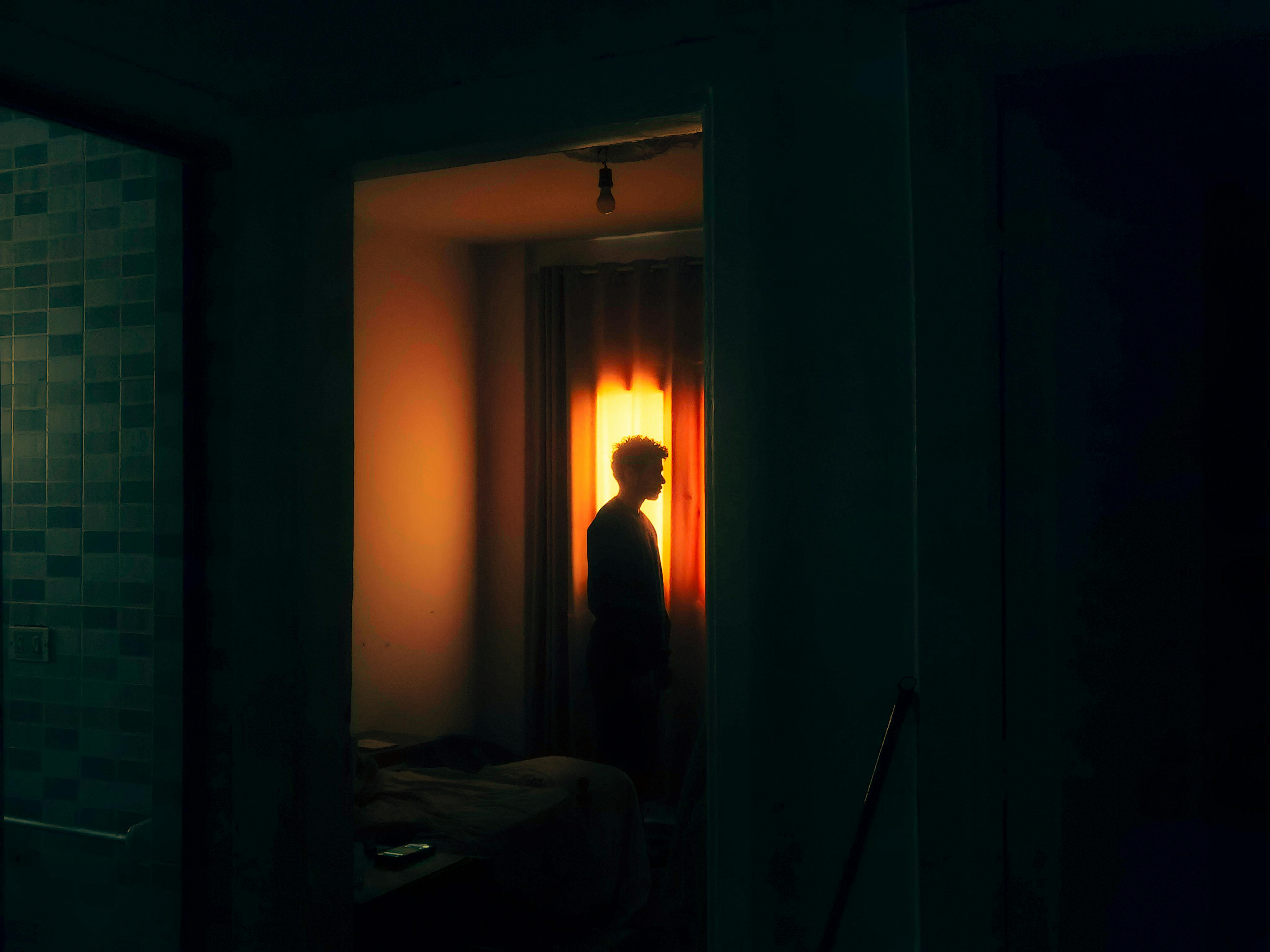
Later that night, I was sitting alone in my room. It was dark and quiet, with only a warm yellow lamp glowing on my desk.
There was no fear. No noise. Just calm silence.
And in that silence, I started thinking about what I had seen during the day with that child.
That is when I began to connect the dots.
Not just one memory, but many small fear-filled moments from my childhood started making sense to me — moments where ghost stories, warnings, and imagination had quietly shaped how I felt about darkness and being alone.
When I was young, the adults around me often told stories about ghosts — stories about women being possessed, haunted houses, spirits roaming at night. Sometimes these were told for fun, sometimes as warnings, sometimes just casually in conversations.
At that age, I didn’t question them. I absorbed them.
Then television added fuel to this. Horror shows, creepy background music, scary faces — they gave a visual shape to the things I had only heard in words.
In my mind, ghosts became something very specific:
- Invisible
- Human-like
- Silent
- Present in normal places — rooms, corridors, houses
- Active at night, when you are most vulnerable
- Connected to death, which is real, not fantasy
This combination created a very different kind of fear.
Not the fear of monsters.
But the fear of something that could be there, even if you couldn’t see it.
That uncertainty is what creates the deepest fear.
As a child, my imagination was much stronger than my logic. I did not have enough knowledge. I was not capable of critical or rational thinking.
So whenever I was alone in a dark place, my mind didn’t think,
“There is nothing here.”
It thought,
“What if something is here?”
And that “what if” was enough to make the fear feel completely real.
And I didn’t just feel this fear in theory. I lived it, many nights, in very real situations.
Incident 1 — Power Cut
One incident used to happen many times during my childhood and I still remember how intense it felt.
I was a child who was deeply afraid of ghosts. So much so that while sleeping at night, I would tightly hold my mother’s or my nani’s hand. That physical touch gave me comfort. It made me feel safe enough to fall asleep.
For me, that hand was proof that nothing bad could happen.
Many nights, around 2 AM, there would be a sudden power cut. In my locality, this was common. Whenever it happened, all the family members would go to the roof to sleep in the open air.
But sometimes, I would still be asleep when they left.
And then I would wake up.
I would open my eyes and see complete darkness. No light. No sound. No one beside me.
In that moment, my mind did not think,
“Everyone must be on the roof.”
Instead, the fear I had stored in my imagination took control.
I felt like I was alone in a place where I should not be alone.
My heart started racing. My body felt stiff. I didn’t try to check anything. I didn’t try to call anyone.
I just ran.
I ran out of the room, through the darkness, towards the stairs and straight to the roof — as if I was escaping from something behind me.
Like the Flash, without looking back even once.
Today, I know there was nothing there.
But back then, the fear felt completely real.
Incident 2 — Alone in the Room
There was another pattern in my childhood that I didn’t understand at that time.
Whenever I was alone at home or even alone in a room during the day, the first thing I would do was switch on the TV and play cartoons at full volume.
Not because I wanted to watch them so badly, but because the sound distracted me. The noise made me feel like I wasn’t alone. It filled the silence that my mind used to turn into fear.
This trick worked during the daytime.
But this never worked at night.
At night, I could not even imagine myself sitting alone in a room. The idea itself was uncomfortable.
Looking back now, I realize something important.
I wasn’t afraid of being alone.
I was afraid of what my mind had been trained to imagine when I was alone.
Growing Up — Rewiring the Fear
As I grew older, something slowly started changing inside me.
I gained more maturity. I learned to think more logically. I understood how the mind works. And without realizing it, the thoughts that were once filled with imaginary fear started getting replaced with logical explanations.
The brain hates incomplete information.
As a child, my mind used to say,
“What if something is there?”
Now, my mind says,
“It’s probably a rat.”
“Maybe it’s the wind.”
“Something must have fallen.”
Earlier, the unknown meant danger.
Now, the unknown means curiosity.
Somewhere along the way, I overcame that fear.
Coming Back to That Child
When I look back at that 4–5-year-old child being scared of “Kamla,” I don’t see a funny parenting trick anymore.
I see the beginning of a fear being planted.
Right now, it looks harmless.
But what no one sees is what gets installed inside him.
Darkness will start to feel uncomfortable.
Silence will start to feel unsafe.
Being alone will start to feel scary.
This is what I call Ghost Parenting.
Using imaginary fear for short-term control, without realizing the long-term effect it leaves on a child’s mind.
Children should be taught fear — but of real things.
Strangers. Unsafe places. Electricity. Fire. Traffic.
Not imaginary ghosts.
They believe what we tell them.
And they carry it longer than we think.
I didn’t overcome ghosts.
I had to rewire the fear that was planted in me as a child.
A shortcut for control today can become a long-term fear for them.
And maybe, if we stop using ghosts to control children, they won’t have to fight the same fear someday.